
Content automation tool that writes your founder updates across all platforms
Ship code. Ship content. Automatically.
- For
- Solo founders and small startup teams (1-5 people) who ship code regularly but struggle to maintain a consistent social media presence
- Who are
- Frustrated by the gap between what they build and what the world sees. They know visibility compounds. They've watched Pieter Levels, Marc Lou, and Danny Postma build audiences by sharing their work — but writing posts drains their mental energy.
- We build
- An automated content engine that turns your building activity into ready-to-publish social posts. Connect GitHub, Linear, Notion, and Stripe. ShipLog monitors your commits, completed tasks, and revenue milestones — then generates authentic, voice-matched posts.
- Unlike
-
Buffer/Hootsuite — built for marketers, you still write everythingTypefully/Hypefury — better for writers, but you still writeTweet Hunter/Taplio — generic AI output, shadowban risks
- We deliver
-
Zero creative effort — your commits ARE your contentYour voice, not AI slop — trained on your actual writingMulti-platform — X, LinkedIn, Threads, Bluesky
- So that
- Founders build their reputation while they build their product. In 12 months: documented journey, engaged audience, inbound opportunities — without writing a post from scratch.
The Problem
Knowledge workers and founders know they should "build in public" but 73% fail to maintain consistency. The problem isn't willpower — content creation drains the same creative energy needed for building.
“Build in public is more like destroying mental peace in public. I would rather spend my time working on real marketing strategy rather than wasting my time with people who will never convert.”
 Indie Hackers ↗
“The constant pressure to perform. Some days you got nothing to show and you feel like you're letting your 'audience' down. It's exhausting.”
 r/buildinpublic ↗
“Wrong. You should NOT create a product that ONLY relays on building in public to sell. I have built in public before, but is too toxic for the product and your mental health... Is a trap. Social media is a trap.”
Indie Hackers ↗
“Sure probably would love to, but there is a big thing that really holds me back - effort to start. If you have an audience already it's a no-brainer... But there are lots of people who are super anxious about it.”
Indie Hackers ↗
“I definitely disagree with this! Build in public can be more of a distraction as you worry too much about the update that you need to post than the quality of the product that you are building.”
Indie Hackers ↗
Market Signals
Loading chart...
Competitors
Turns GitHub commits into Twitter posts. Made specifically for developers building in public.
No third-party reviews available yet — tool launched in 2025.
 T
Taplio
$39/mo
T
Taplio
$39/mo
LinkedIn personal branding tool. AI-powered post writing, scheduling, and engagement analytics.
 H
Hypefury
$29/mo
H
Hypefury
$29/mo
Twitter growth tool with auto-DMs, engagement features, and viral tweet recycling. For creators monetizing their audience.
 B
Buffer
$5/mo per channel
B
Buffer
$5/mo per channel
Social media scheduling for brands and agencies. Plan, collaborate, and publish across all major platforms.
 T
Typefully
$12.50/mo
T
Typefully
$12.50/mo
Write and schedule Twitter threads and LinkedIn posts. Built for creators who want to grow their audience.
How the offer ladders up
50 post templates PDF, Notion content calendar, sharing checklist, 5 sample AI posts from real commits
1 source (GitHub OR Linear OR Stripe), 2 platforms (X + LinkedIn), 20 posts/month, manual review
All sources (GitHub, Linear, Notion, Stripe), all platforms, 100 posts/month, auto-scheduling
Up to 5 team members, 3 projects, unlimited posts, API access, white-label
Value Equation Breakdown
Alex Hormozi's framework for understanding if an idea will be easy to sell. Higher scores = easier sell.
8.5/10
↑Maximize these
Be known for what I build — without becoming a content creator. 9/10
Mechanism is believable, needs social proof. 7/10
↓Minimize these
Posts generated in minutes, results in days. 9/10
Connect and approve, that's it. 9/10
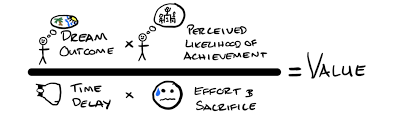
Alex Hormozi's Value Equation from $100M Offers. The higher your score, the easier your offer is to sell.
Understanding the Value Ladder
The Value Ladder structures your offers in ascending levels of value and price. Start with something irresistible and low-barrier, then build trust and deliver more value at each step up.
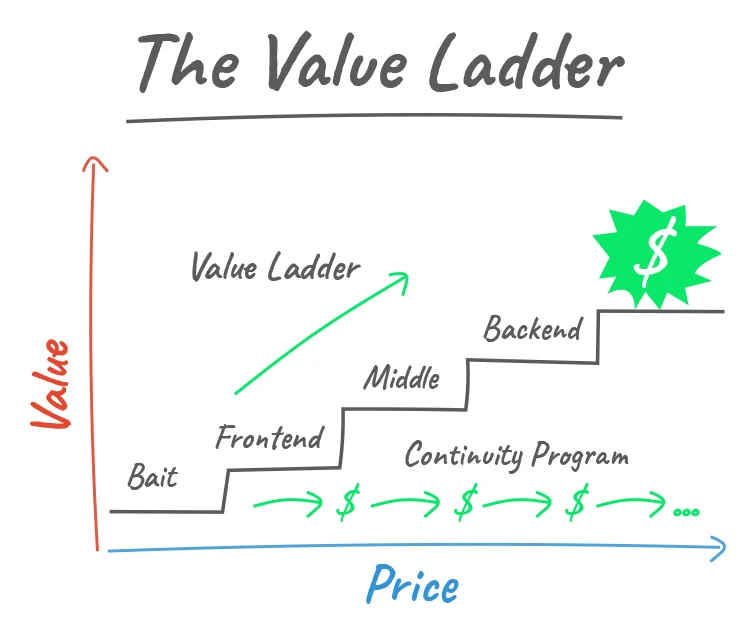
Why it works
The stages
Free value that builds trust and captures leads.
Low-ticket product that converts leads into buyers.
Your main product delivering the full solution.
Ongoing value through memberships or add-ons.
Premium, high-ticket solution for your best customers.
Framework: Russell Brunson — DotCom Secrets